BMW Valve Cover Gasket Leaks: Signs & Solutions
Auto Repair, BMW Maintenance, Valve Cover Gasket Leaks
BMW Valve Cover Gasket Leaks: Signs, Causes and When to Repair Them
Valve cover gasket leaks are one of the most common oil leak issues BMW owners face. Knowing the warning signs, understanding why they happen, and getting expert repair can protect your engine and your wallet.
What the Valve Cover Gasket Does on Your BMW
The valve cover sits on top of your BMW’s engine and seals the upper portion of the cylinder head. The valve cover gasket is the rubber or rubber-like seal that fits between the valve cover and the cylinder head, keeping engine oil inside while the valvetrain moves at high speed. Its main jobs are to:
Prevent oil from leaking out of the top of the engine
Keep dirt and moisture from entering the valvetrain area
Help maintain proper oil pressure and lubrication inside the engine
Because BMW engines often run hot and use synthetic oils, the gasket is constantly exposed to heat, pressure, and oil vapors, making it a wear-and-tear item over time.
Why BMW Valve Cover Gaskets Start to Leak
On many BMW models, especially as they age or pass higher mileage, the valve cover gasket naturally begins to fail. Common reasons include:
Heat cycling: Constant heating and cooling causes the gasket material to harden, shrink, or become brittle.
Oil and chemical exposure: Over years of contact with oil and vapors, the gasket loses elasticity and can crack.
Plastic valve covers: Many modern BMWs use plastic valve covers that can warp or crack, placing extra stress on the gasket.
Improper torque: If the valve cover bolts were previously over- or under-tightened, the gasket may not seal evenly.
Common Symptoms of a BMW Valve Cover Gasket Leak
A failing valve cover gasket often gives you several clues before it turns into a major problem. Key warning signs include:
1. Burning Oil Smell
One of the first things many BMW owners notice is a burning oil smell, especially after driving or when stopped at a light. This happens when leaking oil drips onto hot engine components, such as the exhaust manifold, and burns off, creating a sharp, acrid odor inside or around the car.
2. Visible Oil Around the Valve Cover
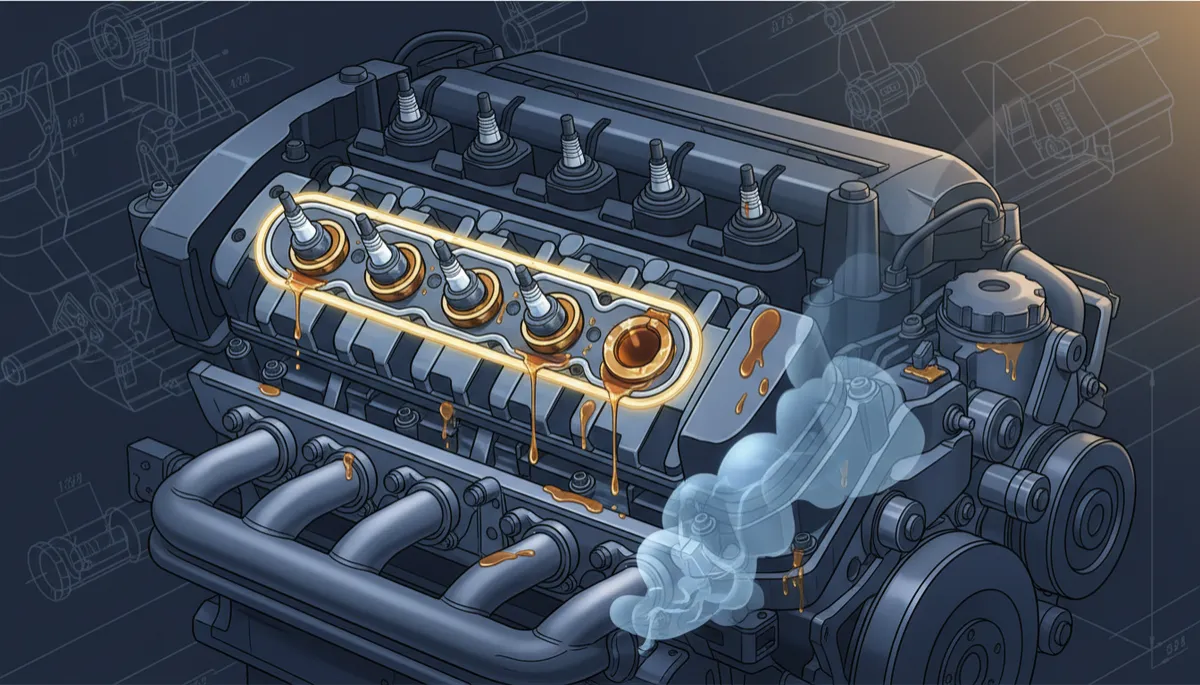
If you look under the hood, you may see wet or damp oil around the edges of the valve cover or in the spark plug wells. On a clean engine, even a light film of fresh oil along the gasket line is a strong indicator that the seal is no longer tight.
3. Oil Leaks onto Other Components
As the leak worsens, oil can travel downward and coat other components. It may drip onto the exhaust, alternator, belts, hoses, or ignition coils. This not only creates a mess but can damage rubber parts, cause belt slippage, or lead to misfires if oil reaches the spark plug tubes or coil packs.
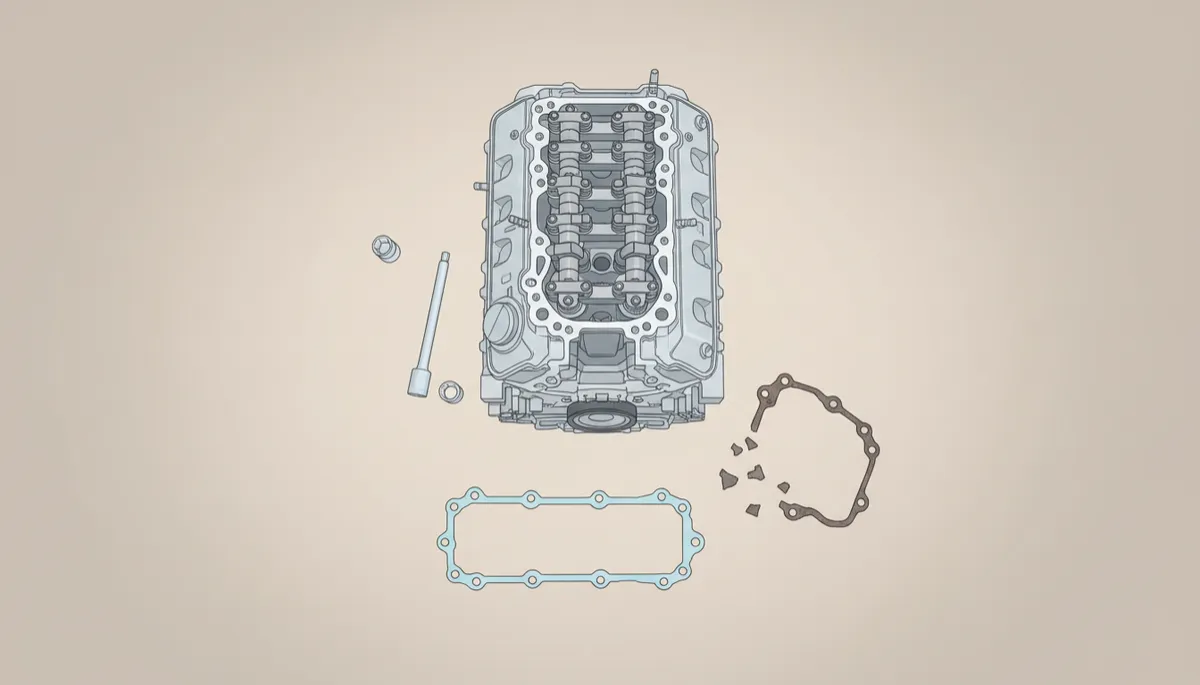
Replacing a hardened gasket with a fresh seal stops leaks and protects nearby components.
4. Smoke from the Engine Bay
When enough oil hits very hot surfaces, you may see light smoke rising from the engine bay, especially after a drive or when you come to a stop. This is typically oil burning off the exhaust manifold or catalytic converter and should be addressed immediately, as it can become a fire risk in severe cases.
5. Low Oil Level Between Services
A slow valve cover gasket leak may not leave big puddles on the ground, but you’ll notice your oil level dropping between oil changes. If you are frequently topping off oil or your low-oil warning light comes on, a valve cover gasket leak is one of the first areas a BMW specialist will inspect.
Why Proper Diagnosis Matters
Not every oil leak on a BMW comes from the valve cover gasket. Other common sources include the oil filter housing gasket, oil pan gasket, or even leaking seals and sensors. That’s why accurate diagnosis is critical before any repair:
A trained technician will clean the area, inspect the engine from above and below, and trace the leak to its true source.
They will distinguish valve cover gasket leaks from other issues like head gasket problems, PCV system failures, or cracked plastic covers.
Proper diagnosis prevents you from replacing the wrong part and still ending up with an oil leak.
📌 Key Takeaway: If you smell burning oil, see smoke, or notice low oil, have a BMW specialist confirm the exact leak source before approving repairs.
Typical BMW Valve Cover Gasket Repair Process
Replacing a valve cover gasket is a precise job, especially on modern BMW engines with tight packaging and delicate plastic components. A typical repair includes:
Initial inspection: Confirm the leak source and check for related damage, such as oil-soaked ignition coils or wiring.
Component removal: Remove engine covers, ignition coils, spark plug boots, and any hoses or wiring obstructing the valve cover.
Valve cover removal: Carefully unbolt and lift the valve cover to avoid cracking plastic or damaging mating surfaces.
Cleaning and inspection: Clean all sealing surfaces, inspect the valve cover for warping or cracks, and remove old gasket material and sealant.
New gasket installation: Install a high-quality replacement gasket and any related seals (such as spark plug tube seals) in the correct orientation.
Reassembly with proper torque: Reinstall the valve cover and components, tightening bolts in the correct sequence and to BMW torque specifications to ensure an even seal.
Final checks: Verify there are no new leaks, clear any related fault codes, and test-drive the vehicle.
Why You Should Address Valve Cover Leaks Early
Ignoring a valve cover gasket leak can lead to much bigger problems than a few oil spots. Addressing the issue early helps you:
Protect your engine: Running low on oil or allowing oil to burn off continuously can increase engine wear and operating temperatures.
Prevent electrical issues: Oil-soaked ignition coils and connectors can cause misfires, rough running, and check engine lights.
Reduce fire risk: Heavy oil leaks onto very hot exhaust components are a safety concern if left unchecked.
Save money long term: Fixing a gasket now is far less expensive than repairing engine damage or replacing multiple components later.
BMW Valve Cover Gasket Repair at Meister Werks in San Diego
If you’re in the San Diego area and suspect a valve cover gasket leak on your BMW, Meister Werks offers specialized service tailored to German vehicles. Their experienced technicians understand the nuances of BMW engines and provide:
Thorough inspection and diagnosis to pinpoint the exact source of your oil leak.
Professional valve cover gasket replacement using quality parts matched to your specific BMW model and engine.
Replacement of related components when needed, such as spark plug tube seals, ignition coils, or cracked plastic valve covers.
Post-repair testing to confirm a clean, dry engine and smooth performance.
Whether you’ve noticed a burning oil smell, smoke from the engine bay, or a steadily dropping oil level, having Meister Werks inspect your BMW early can prevent more serious damage. Their focus on BMW and other European makes means your car receives the attention and expertise it deserves.
If you suspect a valve cover gasket leak, don’t wait. Schedule an inspection with Meister Werks in San Diego and keep your BMW running clean, reliable, and leak-free for years to come.