Ensure Your BMW Gets Proper Care in San Diego
BMW Maintenance, Check Engine Light, OEM vs Aftermarket, BMW Specialist Shop, Vehicle Diagnostic Tools, San Diego
How to Know If Your BMW Is Actually Being Taken Care Of (What Most Shops Won’t Tell You)
Owning a BMW in San Diego should feel like a reward, not a constant worry about whether your car is really in good hands. Between coastal humidity, freeway traffic, and occasional desert heat, your BMW faces conditions that demand more than generic “oil and filter” service. The challenge is simple: how do you know if your shop is truly taking care of your BMW, or just doing the bare minimum and hoping you don’t notice?
Why Proper BMW Maintenance Matters More in San Diego
BMWs are engineered to be precise, responsive, and comfortable. But that precision comes with a catch: they do not tolerate neglect the way some simpler vehicles might. Proper BMW maintenance is not just about avoiding breakdowns; it is about preserving the performance, safety, and value you paid for in the first place—especially in a city like San Diego where you may spend a lot of time on I-5, I-805, or cruising up the coast on Highway 101.
Coastal air carries salt and moisture that can accelerate corrosion on undercarriage components, suspension hardware, and even electrical connectors. Stop-and-go city traffic and repeated short trips can cause carbon buildup, oil contamination, and premature wear on turbocharged engines. High temperatures—particularly when you head inland toward Escondido or El Cajon—stress cooling systems and plastic components that are already known weak points on many BMW models. Proper maintenance in this environment is less about “checking boxes” and more about anticipating problems before they become expensive failures.
What Proper BMW Maintenance Really Looks Like
Many shops advertise “European service” but still treat BMWs like any other car. Proper BMW maintenance, however, has a few non‑negotiable elements:
Correct fluids and specifications: BMW‑approved engine oil, the right coolant formula, and the correct transmission and differential fluids—never “universal” substitutes poured out of a drum in the corner of the shop.
Service based on BMW’s condition‑based maintenance (CBM): Your BMW’s onboard computer tracks oil life, brake wear, and other items. A knowledgeable shop reads this data and combines it with mileage, age, and driving conditions, rather than blindly following a generic 3,000‑mile or 5,000‑mile schedule.
Platform‑specific inspections: Common issues differ between a 3 Series, X5, and M‑car. A BMW specialist will check known problem areas—such as cooling system plastics, oil filter housing gaskets, valve cover gaskets, suspension bushings, and turbo plumbing—before they leak, crack, or fail on the freeway.
Documentation and transparency: Clear digital or printed inspection reports, photos of worn parts, and explanations in plain language so you understand what was done and why.
💡 Pro Tip: Ask your shop to walk you through your last inspection report line by line. If they cannot explain each item in simple terms—or they do not provide a report at all—that is a red flag your BMW may not be getting the attention it needs.
Understanding Your BMW’s Check Engine Light: What It’s Really Telling You
One of the most misunderstood signals in any modern car is the Check Engine Light (CEL). On a BMW, this light is tied into a complex network of sensors and control modules. When it comes on, it is not just an annoyance to be “cleared”; it is your car’s way of asking for a proper diagnosis. How your shop responds to that light tells you a lot about whether they are truly taking care of your BMW—or just treating symptoms.
Solid vs. Flashing Check Engine Light
Solid Check Engine Light: Often indicates an emissions or drivability issue that should be checked soon, but is usually not an immediate emergency. Common causes include a loose gas cap, failing oxygen sensor, small vacuum leak, or minor misfire. You can typically drive home or to your shop, but you should not ignore it for weeks.
Flashing Check Engine Light: This is serious. It usually points to an active misfire that can damage your catalytic converters quickly. If your BMW is shaking, running rough, and the light is flashing, reduce speed and head directly to a safe place or your trusted BMW specialist. Continuing to push the car hard in this state can turn a relatively small repair into a four‑figure exhaust replacement.
Why “Free Code Scans” Can Mislead You
Many chain parts stores and general repair shops in San Diego advertise free Check Engine Light scans. They plug in a basic handheld scanner, read a generic code like P0301 Cylinder 1 Misfire, and then recommend parts: coils, plugs, injectors, or even a catalytic converter. The problem? A code is a starting point, not a full diagnosis. It tells you which system noticed a problem, not necessarily which component is bad. Replacing parts based solely on codes is a fast way to spend money without fixing the root cause.
📌 Key Takeaway: A shop that simply reads a code and immediately recommends replacing parts—without further testing—may be guessing at your expense. A BMW specialist uses factory‑level tools to see live data, perform tests, and confirm the actual cause before touching your wallet.
OEM Parts vs. Aftermarket: What Most Shops Won’t Tell You
Few topics cause more confusion than the OEM vs. aftermarket debate. Some shops insist that only BMW‑branded parts are acceptable, while others promise to “save you money” with cheaper alternatives. The truth is more nuanced—and knowing it can help you avoid both overpaying and under‑maintaining your BMW.
What “OEM” Really Means for Your BMW
OEM (Original Equipment Manufacturer) parts are made by the same companies that supply BMW’s factory assembly lines—brands like Bosch, ZF, Mahle, Lemförder, and others. In many cases, the exact same part is sold in two boxes: one with a BMW logo and part number, and one with the supplier’s brand. The BMW‑boxed part is usually more expensive, even though the component inside is identical or nearly identical.
A quality BMW specialist shop will explain when a genuine BMW part is worth the premium (for example, complex electronic modules or certain updated components) and when a non‑BMW‑branded OEM supplier part will perform just as well for less money. This balanced approach protects your car and your budget.
The Problem with Cheap Aftermarket Parts
Not all aftermarket parts are bad. Some reputable brands engineer upgrades that outperform the original components. However, there is also a huge market of low‑cost, low‑quality parts that may fit your BMW but do not last in real‑world driving—especially under San Diego’s heat and traffic conditions. These bargain parts might save you a few dollars today, only to fail prematurely and force you to pay for the same repair twice, plus more diagnostic time and labor.
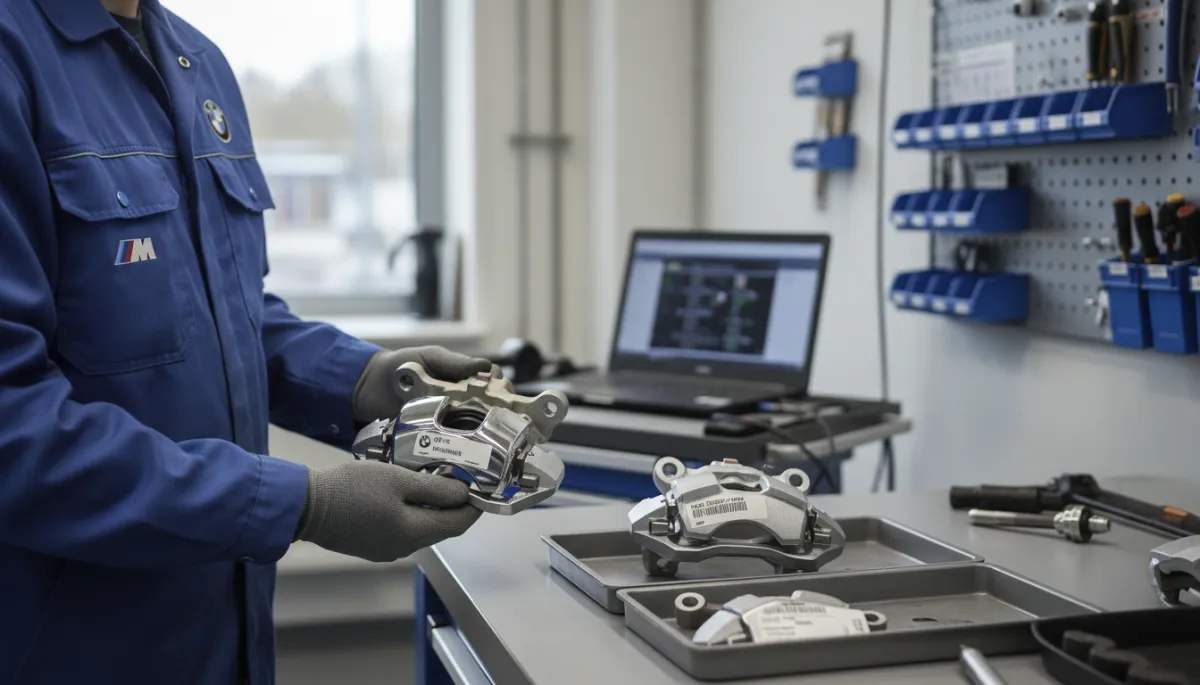
Close-up in a -toned workshop of a BMW technician comparing a genuine BMW-branded part and an...
The right mix of BMW and OEM supplier parts can protect performance without overspending.
A shop that always pushes the cheapest option without explaining trade‑offs may be prioritizing quick sales over long‑term reliability. On the other hand, a shop that insists on only dealer‑boxed parts for everything may be inflating your bill unnecessarily. The key is transparency: your service advisor should be able to explain why they recommend a particular part brand, what warranty it carries, and how it has performed on other BMWs in their care.
Why a BMW Specialist Shop with Advanced Vehicle Diagnostic Tools Matters
Modern BMWs are rolling computers. Even something as simple as a battery replacement can require programming or registration with the vehicle’s control modules. Generic scan tools and “one‑size‑fits‑all” diagnostic equipment often cannot see the full picture. This is where a BMW specialist shop with advanced vehicle diagnostic tools separates itself from the average garage on the corner.
What Advanced Diagnostics Look Like in Practice
Factory‑level access: Tools that communicate with BMW’s proprietary systems, reading manufacturer‑specific codes, live data streams, and service history—not just generic OBD‑II codes.
Module coding and programming: The ability to properly code new parts, update software, and perform adaptations after repairs—critical for components like transmissions, electronic steering, and advanced driver‑assistance systems.
Guided test plans: Many BMW‑specific diagnostic platforms provide step‑by‑step procedures for tracing faults, testing circuits, and verifying repairs, which helps eliminate guesswork and unnecessary parts replacement.
💡 Pro Tip: When you call a shop, ask what diagnostic equipment they use for BMWs. If the answer is a vague “we have a scanner that works on everything,” they may not have the depth of tools needed for accurate BMW diagnostics.
How a Specialist Diagnoses Accurately, Avoids Unnecessary Repairs, and Saves You Money
Accurate diagnosis is the foundation of honest, cost‑effective BMW care. A specialist shop in San Diego that knows BMWs inside and out can often solve problems faster and with fewer parts than a generalist who charges less per hour but spends more hours guessing. Over time, that accuracy translates into real savings and fewer surprises.
The Difference Between Guessing and Diagnosing
A non‑specialist reads a code for a lean condition and starts replacing sensors and fuel system components, hoping one of them fixes the issue.
A BMW specialist uses smoke testing, fuel trim analysis, live data logging, and experience with common BMW failure points to find a tiny cracked intake boot or a failing PCV system—often the real cause of that same lean condition.
Both shops may eventually “fix” the problem, but the path is very different. The specialist charges for thorough diagnostics and a targeted repair. The generalist may charge for multiple parts, repeated visits, and extra labor before stumbling onto the solution. From the outside, both invoices can look similar, but one reflects precision and prevention, while the other reflects trial and error paid for by you.
Avoiding Unnecessary Repairs by Seeing the Whole System
BMW systems are interconnected. A battery that is slightly weak can cause strange electrical symptoms, warning lights, and even transmission behavior. A specialist understands these relationships and tests the system as a whole instead of chasing each symptom separately. This holistic view prevents unnecessary repairs and helps you prioritize what truly needs to be done now versus what can safely wait.
📌 Key Takeaway: The right diagnosis often costs less than the wrong repair. Paying for one hour of expert diagnostic time is cheaper than replacing three good parts because someone guessed.
Long‑Term Savings: How Proper BMW Care Pays You Back
Some BMW owners hesitate to visit a specialist because the hourly rate or initial estimate looks higher than the neighborhood shop. But when you zoom out and look at the total cost of ownership, a well‑maintained BMW serviced by a specialist in San Diego often costs less over five to ten years than one that bounces between discount garages.
Fewer repeat visits: Doing a job right the first time reduces comebacks, rental cars, tow bills, and time off work to deal with breakdowns.
Preserved resale value: A BMW with documented specialist service, proper parts, and clean inspections commands a higher price when you sell or trade it in—especially in a market like San Diego where enthusiasts pay attention to maintenance history.
Fewer catastrophic failures: Catching cooling system weaknesses, oil leaks, and suspension wear early prevents the kind of major failures that can cost more than the car is worth on older models.
In other words, proper BMW maintenance and accurate diagnostics are not expenses to avoid—they are investments that pay you back in reliability, performance, and long‑term savings.
How to Vet a BMW Shop in San Diego Before You Trust Them with Your Car
Knowing all of this, the final question is practical: how do you choose the right BMW shop? With so many options across San Diego—from downtown to Kearny Mesa, Miramar, and North County—it is essential to separate true BMW specialists from generalists with a European‑sounding sign. Here is a step‑by‑step way to vet a shop before handing over your keys.
1. Check Their Focus and Experience
Look for clear language on their website and signage that they specialize in BMW or German vehicles—not just “foreign and domestic.”
Ask how many BMWs they service in a typical week and whether they have factory‑trained or BMW‑certified technicians on staff.
2. Ask About Diagnostic Tools and Software
Ask specifically which diagnostic platforms they use for BMWs. Listen for references to factory‑level or BMW‑specific tools, not just a generic code reader.
Confirm they can handle software updates, coding, and programming when needed—not just basic code clearing.
3. Clarify Their Parts Philosophy (OEM vs. Aftermarket)
Ask whether they use BMW genuine parts, OEM supplier parts, or aftermarket—and when they choose each. A trustworthy shop will explain the pros and cons, not just push the cheapest or the most expensive option by default.
Ask about warranties on parts and labor. Strong warranties often signal confidence in both the components and the workmanship.
4. Evaluate Their Communication and Transparency
Do they provide digital inspections with photos and videos, or at least detailed written reports? This transparency helps you see what they see and builds trust over time.
Are they willing to prioritize repairs and maintenance items, explaining what is urgent versus what can wait a few months? Shops that push everything as “urgent” may be more interested in maximizing today’s invoice than in building a long‑term relationship.
5. Look at Reviews—But Read Between the Lines
Online reviews on Google, Yelp, and BMW owner forums can be helpful, but focus on patterns rather than one‑off complaints or praise. Look for repeated mentions of honesty, clear explanations, and long‑term satisfaction.
Pay attention to how the shop responds to negative reviews. Professional, solution‑oriented responses often reflect how they handle issues in real life.
6. Start with a Smaller Service First
Before entrusting a new shop with major repairs, consider starting with an oil service, brake fluid flush, or a scheduled inspection. This gives you a chance to experience their process, communication, and attention to detail without committing to a large invoice. If they handle the small things professionally and transparently, you can feel more confident when bigger jobs come up.
💡 Pro Tip: Trust your instincts during that first visit. A clean, organized shop, clear communication, and a willingness to answer questions are strong indicators that your BMW will be treated with the same care.
Putting It All Together: Is Your BMW Really Being Taken Care Of?
When you step back, knowing whether your BMW is truly being taken care of in San Diego comes down to a few core questions:
Is your shop following BMW‑specific maintenance practices and using the right fluids and parts for your model and driving conditions?
Do they treat the Check Engine Light as a signal for thorough diagnosis, not just a code to clear or an excuse to sell parts?
Are they honest and transparent about the OEM vs. aftermarket parts they use, explaining the reasoning and warranties behind each choice?
Do they have advanced vehicle diagnostic tools tailored to BMW systems, and the expertise to use them properly?
Can they clearly show you how their accurate diagnostics help avoid unnecessary repairs and save you money over the life of the car?
If the answer to these questions is “yes,” you are likely working with a BMW specialist who truly has your best interests in mind. If not, it may be time to start looking for a shop that does. In a city like San Diego, where you rely on your BMW for daily commuting, weekend escapes, and everything in between, the right shop is not just a convenience—it is a crucial partner in keeping your car safe, enjoyable, and financially sensible to own.
Ultimately, proper BMW maintenance is about more than oil changes and brake pads. It is about understanding how your car communicates through warning lights, choosing the right parts, leveraging advanced diagnostics, and partnering with a specialist who values long‑term relationships over short‑term sales. When those pieces come together, you can enjoy everything your BMW was designed to offer—confident that, behind the scenes, it is truly being taken care of the way it deserves.